Suitable: Existing Plant Room
Where ventilation, exhaust, acoustic treatment, fire protection, foundations and service space already exist, an open set avoids duplicating an enclosure.
Product Series / Plant-Room Installation
Suitable for projects with a qualified plant room, equipment shelter or dedicated power area. The engine, alternator and service points remain accessible, while the site must provide ventilation, exhaust, acoustic control, weather protection, fire safety and restricted access.
Why Choose an Open Generator Set
An open set leaves the engine, alternator, controller and cooling system accessible for inspection and system integration. The plant room must provide ventilation, exhaust, acoustic treatment, weather protection, fire safety and restricted access.
Where ventilation, exhaust, acoustic treatment, fire protection, foundations and service space already exist, an open set avoids duplicating an enclosure.
Maintenance teams can inspect fuel, cooling, batteries, wiring and controls without an additional enclosure limiting access.
Choose a sound-attenuated or containerized set when weather, dust, access control or corrosion protection is unavailable.
Near guest rooms, patient areas, classrooms or homes, noise and exhaust require dedicated treatment beyond the generator itself.
Complete Product Range
From small commercial facilities to hospitals, factories and systems above 1MW, the engine, alternator and controls can be matched to critical loads, motor-starting demand, frequency and site conditions.
For small commercial services, telecom, back-of-house duties and independent equipment loads, with emphasis on compact size, fuel use and easy maintenance.
For mid-size commercial buildings, schools, hotel services and general factories; elevator, pump, refrigeration and motor-starting loads should be reviewed together.
For hospitals, shopping centers, large factories and data-center auxiliary systems, often with ATS, LV distribution and fuel-autonomy requirements.
For large critical facilities, expansion and redundancy projects using one or more generators, with N+1 capacity, maintenance windows and future growth considered.
Engine Brands and Power Matrix
Engine options include Cummins, Perkins, Baudouin, Weichai, Yuchai, Doosan, MTU, Scania, Isuzu and Yangdong, with a 60Hz prime-power reference range from 8 to 3000kW. Final selection follows 50/60Hz, voltage, emissions, prime or standby duty and local service conditions.
| Engine Platform | 60Hz Prime-Power Reference | Product Position | Selection Priority |
|---|---|---|---|
| Cummins | 20–3000kW | Broad rating coverage with strong global familiarity and parts support. | Confirm local service, emissions requirements and the specific engine family. |
| Perkins | 8–1350kW | From compact to high-capacity sets with emphasis on stable operation and service intervals. | Match the platform to local support, fuel quality and expected operating hours. |
| Baudouin | 20–3000kW | Wide coverage for projects balancing cost and high-capacity requirements. | Confirm engine family, spare-parts lead time and local technical support. |
| Weichai | 20–3000kW | Broad product portfolio for projects focused on lead time, cost and load acceptance. | Select by step-load demand, duty cycle and target maintenance structure. |
| Yuchai | 20–1600kW | Continuous coverage from small and medium ratings to large generator sets. | Confirm rating, service radius and the alternator combination. |
| Doosan | 160–800kW | Concentrated in medium and high ratings for industrial and commercial critical loads. | Review step loading, operating hours and critical-spares planning. |
| MTU | 1350–2800kW | High-capacity platform for demanding critical-facility projects. | Coordinate project standards, paralleling strategy and lifecycle support. |
| Scania | 218–600kW | Medium-power heavy-duty applications with emphasis on durability and stable output. | Consider continuous load, service network and delivery schedule. |
| Isuzu | 20–40kW | Compact option for light- and medium-duty independent loads. | Compare footprint, noise, fuel use and maintenance access. |
| Yangdong | 8–80kW | Small multi-cylinder sets for general services and equipment loads. | Define operating hours, standby duty and local service conditions. |
Complete System Configuration
Two generator sets with the same rating can become very different project solutions once engine, alternator, controls, fuel autonomy and distribution boundaries are defined.
Choose by brand preference, rating, step-load capability, emissions, maintenance structure and local service support.
Match Stamford, Leroy-Somer, Faraday or other platforms to temperature-rise, insulation, protection and voltage-stability requirements.
Confirm manual or automatic start, protection logic, communications, event records and remote-monitoring needs.
Define utility transfer, critical-load zoning, LV switchboard feeders, breaker selection and expansion boundaries.
Size base or day tanks for target runtime and verify refueling, spill protection, exhaust backpressure and fire requirements.
Large systems can include paralleling, N+1 redundancy, load management, remote inspection and critical spare-parts kits.
Structure and Quality Evidence
Customers do not need to become generator specialists, but they should be able to review the evidence that affects reliability, serviceability and long-term operation.
Check frame rigidity, lifting points, isolator layout, engine-alternator alignment and transport restraints.
Verify radiator capacity, intake and discharge area, hot-air recirculation control and derating for heat or altitude.
Review weld finishing, corners, coating protection and locations prone to water retention, corrosion or stress.
Check terminals, wire identification, grounding, harness support, controller protection settings and alarm-test records.
Filters, belts, batteries, separators, control panels and cooling components require practical service clearance.
Retain no-load, load, transfer, protection and alarm results matched to the delivered nameplate, model and serial number.
Compare Adjacent Product Types
| Product Type | Best-Fit Site | Main Advantage | Must Be Resolved in Advance |
|---|---|---|---|
| Open | Qualified plant room or dedicated power area | Visible layout, direct service access and flexible integration | Ventilation, exhaust, noise, weather, fire safety and restricted access |
| Integral Base Tank | Compact site with a defined routine runtime | Generator and daily fuel supply in one footprint | Tank capacity, refueling, structural load and fire-safety boundaries |
| Sound-Attenuated | Outdoor or close to occupied areas | Integrated weather protection, noise reduction and basic access control | Boundary noise, airflow, exhaust and service-door clearance |
| Containerized | High-capacity outdoor projects and integrated transport | High system integration with space for independent maintenance | Transport, lifting, foundation, cooling, distribution and fuel system |
Typical Applications
Supports routine maintenance and can integrate staged motor starting, paralleling expansion and fuel systems.
Suitable for dedicated power rooms; verify ATS, critical-load sequence, noise and test records together.
Design together with UPS, cooling, LV distribution, paralleling and remote monitoring.
Confirm load zoning for fire systems, elevators, security and cold chain, plus the plant-room exhaust route.
Typical configurations · Not the complete range
The range is not limited to the models below. These examples show common outputs, brand combinations and package choices; refer to the series overview for full coverage and available options.
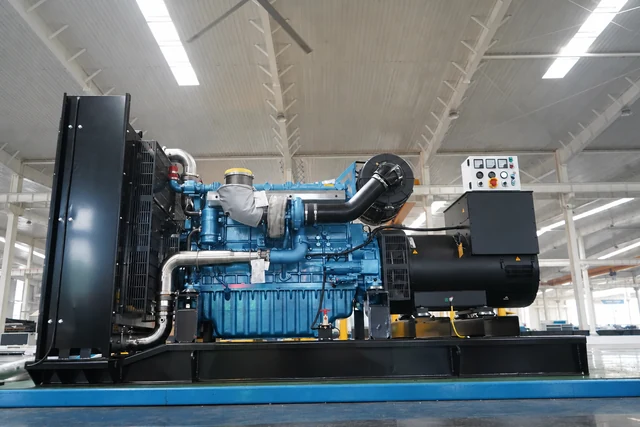
Weichai power with a STAMFORD alternator for projects with an existing generator room and a priority on service access.
View this configuration →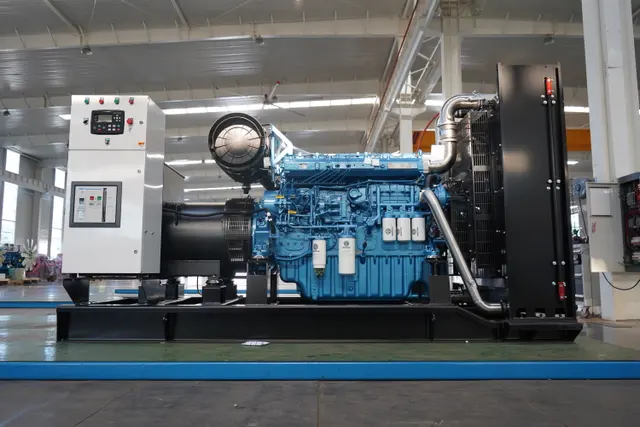
A 600 kW Weichai package with alternator and controls selected for starting and service conditions.
View this configuration →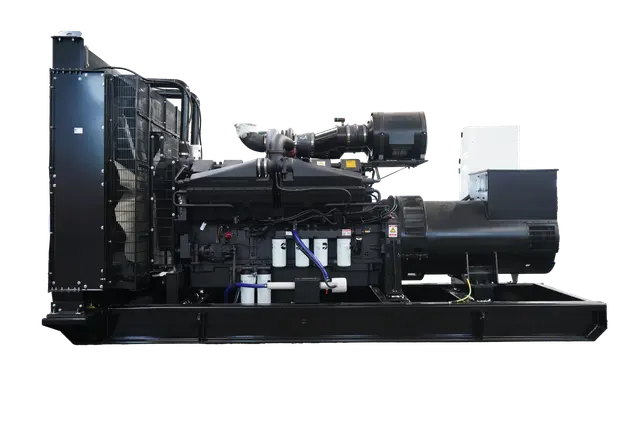
Cummins power with a Leroy-Somer alternator for large loads, supported by complete-BOM and loaded-test verification.
View this configuration →Share the country, city, application, required capacity or critical loads, installation environment and current issue to receive product, system-scope and implementation guidance.