Remote mine generator service and spares

Remote mine generator service and spares

For remote mines facing spare-parts delays, slow diagnosis and limited maintenance capacity, plan generator spares, operating records, remote diagnosis, maintenance and local service response.

Remote mine generator service and spares

Remote service and spare parts delays

Remote mines must plan maintenance before delivery. If a small spare part is not in place, it may lead to long downtime.

Scene background

After-sales risks in remote mines are often decided before delivery

The further the mining site is from cities, service providers and spare parts warehouses, the less the power generation system can be managed solely in terms of equipment procurement. Filters, belts, sensors, controllers, AVRs, operator training and remote diagnostics all impact long-term reliability.

Many on-site generator sets can still run, but once a minor fault occurs, they may stay down for a long time because spare parts, diagnosis, operating records, or local support are missing. Remote service should be planned before delivery, not improvised after a fault.
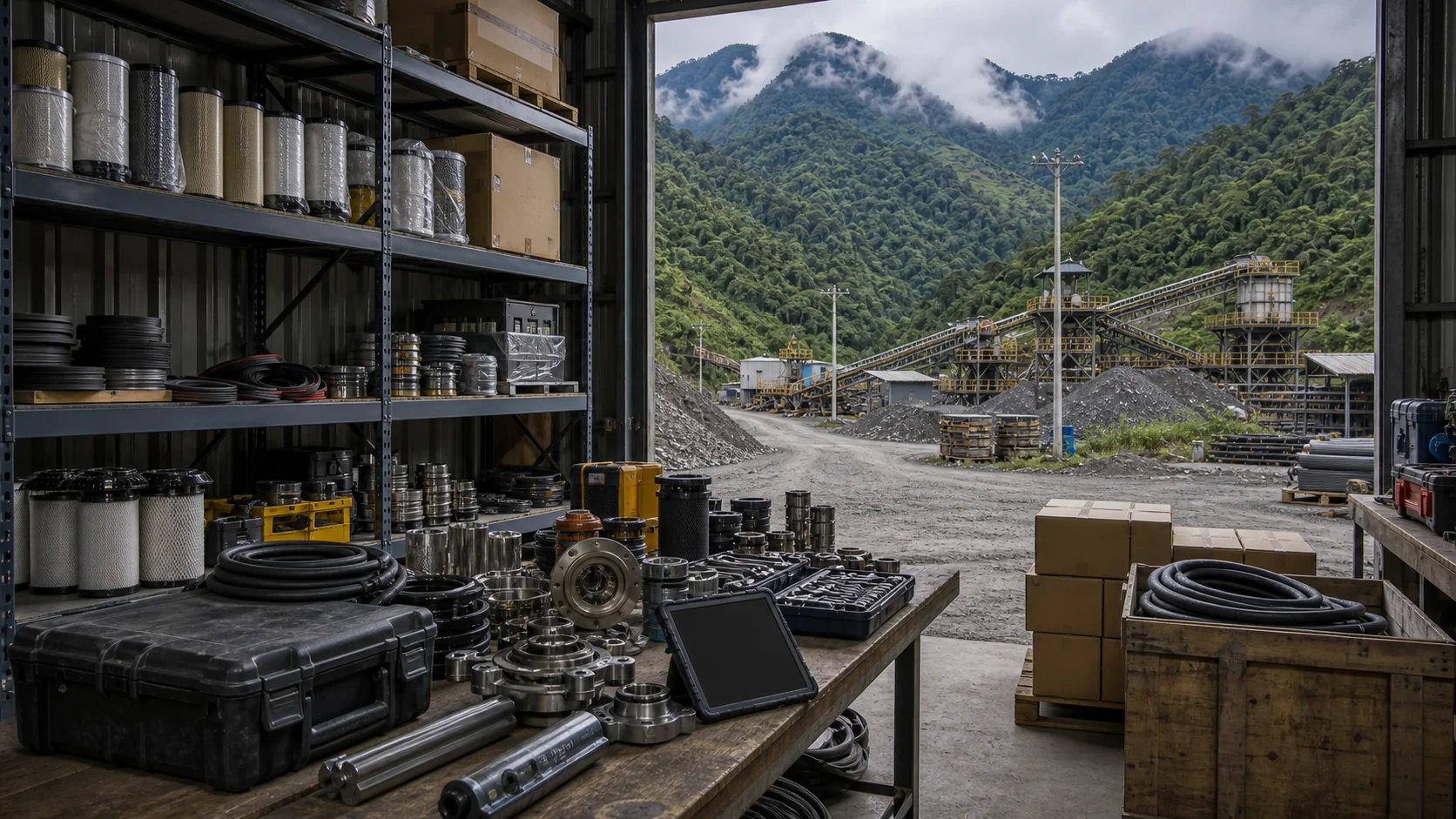

Site problem

A small fault may turn into a long downtime due to missing parts and lack of diagnosis.

The most common pain point on site is not complex overhaul, but small problems that no one can diagnose quickly: alarm codes are unclear, controller or sensor spares are missing, filters and belts are not in stock, and operators do not know where to check first.

It takes time to wait for service personnel or spare parts to arrive on site, so the mine can only temporarily reduce the load, stop equipment, or borrow generators. For remote mines, slow response is itself a cost of downtime.

Remote mine generator after-sales spare parts On-site issue scenarios

Operational consequences if left unresolved

Lack of maintenance plan will cause reliability problems to reoccur

Without a spare-parts kit, maintenance schedule, and commissioning handover checklist, every site fault has to be discussed from scratch. Missing operating hours, load rate, alarm records, and maintenance records also slow remote diagnosis.

In the long run, the mining team will spend a lot of time on ad-hoc coordination. Small malfunctions turn into lengthy outages, maintenance turns into firefighting, and equipment procurement and service responsibilities become increasingly difficult to define.

Recommended configuration

Deliver spare parts, training, remote diagnostics and service content together

Before delivery, a basic or enhanced spare parts package should be configured, the inventory range of key parts such as filters, belts, sensors, controllers, AVRs, etc. should be clarified, and the commissioning checklist and maintenance cycle should be handed over to the site.

Also requires operational training, remote diagnosis procedures and fault information templates. When an alarm occurs on site, operating hours, load, fault codes and photos can be quickly provided to reduce back-and-forth communication time.

Configuration confirmation steps

Clear service content, spare parts packages and on-site operation procedures

Start by reviewing mine location, access conditions, current maintenance capability, operating hours, and downtime tolerance, then choose between a basic or reinforced spare-parts package.

Set up the commissioning handover checklist and operator training plan, with daily inspection routines, maintenance cycles, alarm records, and fault reporting paths clearly assigned.

Define remote-support and local-service coordination in advance: which issues the site can handle, which can be diagnosed remotely, and which require service personnel on site.

Expected operational benefit

Remote sites no longer need to start communication from scratch every time there is a failure

The goal after planning is to keep common spare parts on site, follow a maintenance rhythm, build basic troubleshooting capability, and give remote engineers enough information to identify problems quickly.

What the mining team gets is a set of service support content: which spare parts are delivered with the equipment, how on-site personnel maintain it, how to report a failure after it occurs, and what responsibilities the remote and local support have.

Information to confirm before quotation

Common site signals

  • The mine site is far away from the generator service provider
  • No filters, sensors, belts, AVRs or controllers are in stock on site
  • Operators lack routine maintenance training
  • There is no clear after-sales support process after commissioning

If this is not planned early

  • A small fault may turn into a long downtime due to missing parts and lack of diagnosis.
  • Alarm codes, operating hours, and load records are incomplete, slowing remote diagnosis
  • Every failure on site must be communicated from the beginning, and maintenance becomes temporary firefighting.
  • The operator does not know where to check first, which can easily amplify the impact of the fault.
  • Service responsibilities are unclear, equipment, spare parts, remote support and local on-site waiting for each other

Project confirmation points

  • Mining location, traffic conditions, service arrival time and downtime tolerance
  • On-site maintenance personnel capabilities, operational training and daily inspection records
  • Inventory of key spare parts such as filters, belts, sensors, controllers, AVRs, etc.
  • How to report operating hours, load rate, alarm code and fault photos
  • Which issues can be handled on site, diagnosed remotely, or require service personnel on site

Recommended equipment scope

  • Basic and Enhanced Spare Parts Package
  • Operation training and commissioning checklist
  • Remote diagnosis and fault code review
  • Maintenance cycle and service report template
  • Coordinate with local service partners in available areas

Engineer assistance

Contact an engineer first, then review the equipment and service scope together

When a minor fault occurs in the mine site, are there spare parts, records and remote diagnostic data on site that can be dealt with first?

Equipment and module scope

Basic or enhanced spare parts packages, filter belts, controller/AVR spare parts, operational record templates, remote diagnostics and local service coordination.

Information engineers will help organize

  • Mining location, roads and service access conditions
  • Operating hours, load rate, alarm codes and maintenance records
  • On-site maintenance personnel capabilities and training needs
  • Common spare parts inventory and downtime tolerance

Related equipment and service

Spare parts support packageRemote diagnosisMaintenance planOperation trainingLocal service coordination

Engineer contact

Contact an engineer to review the right configuration.

If the information is incomplete, contact an engineer first. Start with the mine location, the site problem or the general equipment condition; the engineer will organize the loads, site conditions and configuration scope with you.

Scan WhatsApp to contact an engineer

An engineer will contact you soon to review your site issue and needs.

Scan WhatsApp to contact an engineer WhatsApp: +86 176 8575 2779
Email an engineerfeyqiao@hohank.com
or leave your contact information

An engineer will contact you soon to review your site issue and needs.

Email engineer