Project Background
Before the Edge Facility Went Live, the First Question Was Whether the Complete Set Could Be Trusted
This edge facility planned one standby diesel set first, with parallel capacity to follow rack growth. UPS, low-voltage distribution and cooling loads were defined, but procurement faced a more basic question: proposals showed similar ratings and recognizable engine and alternator brands, yet which complete set provided stronger evidence for starting, speed build-up, regulation, cooling, fuel use and loaded performance?
Engineering moved the discussion beyond model tables to the minutes after utility loss. The UPS provides only a short ride-through window; the generator must start, establish voltage and frequency, accept load, maintain cooling and hold stable output in sequence. Weakness at any step delays ATS, UPS and cooling coordination downstream.
For a data center, generator quality means stable output within the UPS handoff window with traceable evidence.
Challenges and Requirements
Start Window, Regulation, Cooling, Fuel and Test Records All Had to Withstand Review
Data center loads are sensitive to voltage, frequency and recovery time. Configuration therefore covered engine governing, alternator regulation, controller alarms, breaker and wiring assembly, while acceptance included radiator margin, airflow, base tank, vibration isolation, grounding, service access and control-panel readability. Only coordinated performance turns those components into a reliable set.
Site review also included UPS input behavior, cooling starting methods and low-voltage zoning. A clean no-load start does not prove stable voltage and frequency under real load; factory records, load testing and arrival inspection had to show how the set behaves with facility loads.
Clear start response, voltage-frequency stability, fuel management, cooling capacity, controller records and serviceability.
Validate UPS window, ATS/STS, cooling, core network and low-voltage zones together.
Factory testing, staged loading, alarm records, voltage-frequency curves and site acceptance checklist.
Generator-Set Solution
Confirm the Generator for Starting, Regulation, Load Acceptance, Efficiency and Serviceability
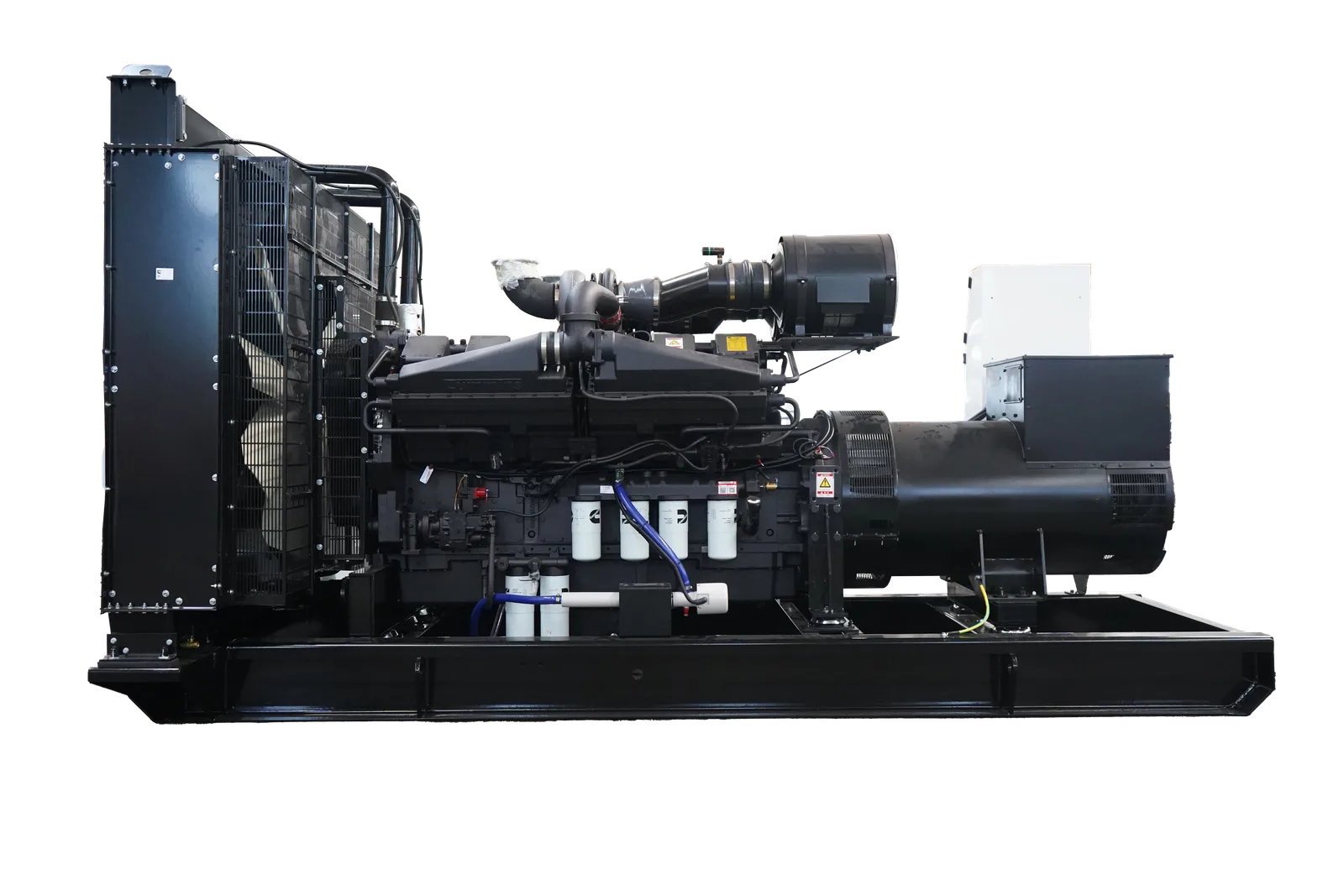
The diesel set is the core of data center backup. The engine must start and reach speed quickly after utility loss; the alternator and AVR must establish stable voltage and frequency within the UPS window; and the controller must record start, run, alarm and shutdown data. No-load starting matters, but so does stability after cooling, core networks and UPS input load connect.
Fuel economy was assessed through testing and standby management. Data center sets undergo periodic tests, load-bank work and emergency loading; excessive redundancy increases fuel, maintenance and low-load pressure. Staged loading, future rack growth, fuel runtime and service windows were used to balance capacity with operating cost.
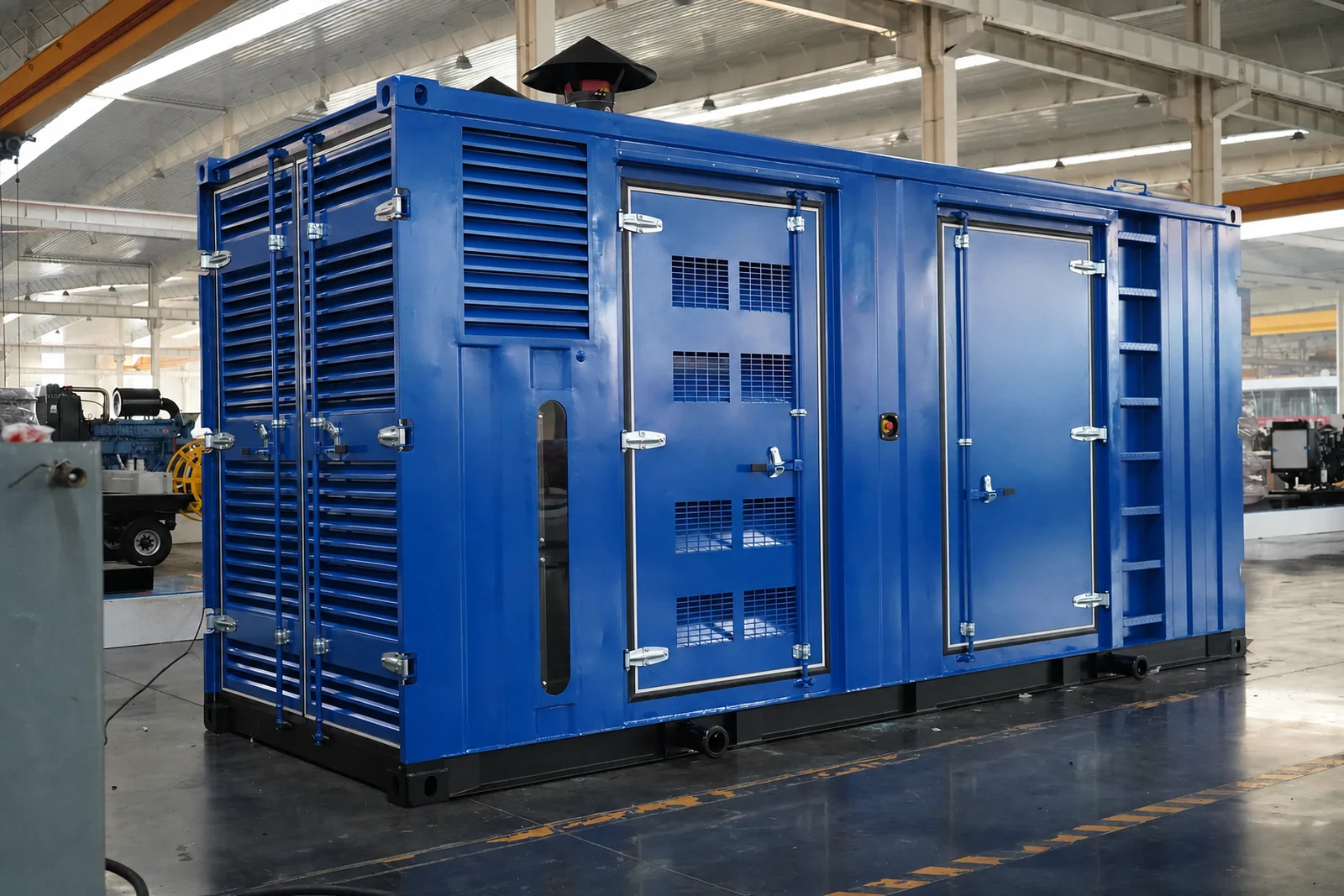
Complete-set serviceability also determines long-term reliability. Radiator, airflow, base tank, isolation, grounding, breaker, wiring, control panel, service doors and consumable access were confirmed at factory and site. Outdoor or containerized sets also required weather, dust, noise, exhaust and ventilation review.
- 01Validate the start window across engine, alternator, AVR, controller and starting batteries.
- 02Assess fuel use across periodic tests, staged loading, future expansion and runtime.
- 03Assess reliability through radiator, fuel lines, wiring, controls, service doors and consumable access.
Power-System Solution
UPS, ATS/STS, Cooling and Low-Voltage Zones Were Built Around Generator Capability
After generator selection, engineers confirmed facility load boundaries. Core network, surveillance, IT equipment and critical lighting transferred first. Cooling, selected pumps and operations monitoring recovered next. Noncritical offices, auxiliary lighting and deferrable loads connected in stages.
UPS review focused on the window from utility loss to stable generator output. ATS/STS review confirmed transfer logic, interlocks and records. Low-voltage checks covered breakers, cables, grounding, feeder capacity and expansion interfaces. Load-test records included start time, speed build-up, voltage-frequency recovery, cooling connection, alarms and corrective actions.
UPS input, core network, surveillance, critical lighting and essential operations systems.
Cooling, pumps, environmental monitoring, access-security and essential auxiliaries.
Start, loading, ATS/STS transfer, UPS window, fuel level, alarms and test data.
Professional Engineering Services
From Candidate Review to Site Testing, Engineering Turned Specifications into Evidence
Pre-go-live inputs included UPS ride-through, critical IT and cooling loads, target handoff window, candidate data, installation location, airflow, exhaust, noise, tank and service space. Outputs defined generator form, capacity margin, cooling and ventilation, fuel runtime, ATS/STS interfaces, low-voltage zones and test method.
After arrival, service covered isolation, airflow, exhaust, fuel, grounding, controls, low-voltage interfaces and access. Testing recorded start, acceleration to rated speed, voltage build-up, staged loading, stable run, unload, shutdown and alarm checks, preserving load status, voltage-frequency change, oil pressure, coolant temperature, controller alarms, cooling performance and corrective details.
- 01Before arrival, confirm dimensions, foundation, lifting route, cooling, exhaust, fuel and service space.
- 02During installation, confirm fuel lines, cables, grounding, controls, ATS/STS interfaces, switchboards and monitoring points.
- 03At handover, confirm starting, loading, UPS window, cooling recovery, alarm records and operator transfer.
After-Sales and Operations Support
After Go-Live, Continue Tracking Hours, Load Tests, Fuel, Cooling and Alarms
After handover, fixed records captured hours, starts, load factor, fuel use, battery voltage, fuel level, coolant, controller alarms, room temperature and switchboard photographs. Remote monitoring provides early visibility; without it, scheduled photographs and forms preserve the evidence.
Spares were planned by generator model: filters, belts, starting batteries, sensors, chargers, controller parts, common electrical items and consumables. Quarterly tests, pre-expansion checks, fuel management and cooling changes update the original handover evidence so the set remains verifiable.
Results and Feedback
The Customer Gained Clearer Generator Quality, Handoff Timing and Operating Evidence
After adjustment, the backup plan moved from candidate comparison to acceptable evidence of complete-set quality. The facility team could explain the configuration, UPS-window validation, cooling recovery, fuel and test management, and ownership of future maintenance records.
The result was practical: equipment quality had evidence, start and stable output were traceable, load-test records were complete, cooling and service limits were clear, and after-sales inspection extended handover evidence. For a data center, that is closer to SLA-grade backup proof than a power rating alone.
Good data center generator construction places the set, UPS handoff, cooling recovery and operating records on one evidence chain.