For medium-capacity projects moved regularly and requiring stable towing
Supports construction, plant maintenance, events and rental work with options for acoustic enclosure, extended fuel, rapid cable connection and remote records.
Typical Project Configuration · Customizable Range · 300kW
A tandem-axle mobile source for construction, facility repair and medium-capacity temporary power. The extra axle improves load carrying and tow stability, while gross weight, brakes, road rules and site leveling remain project decisions.
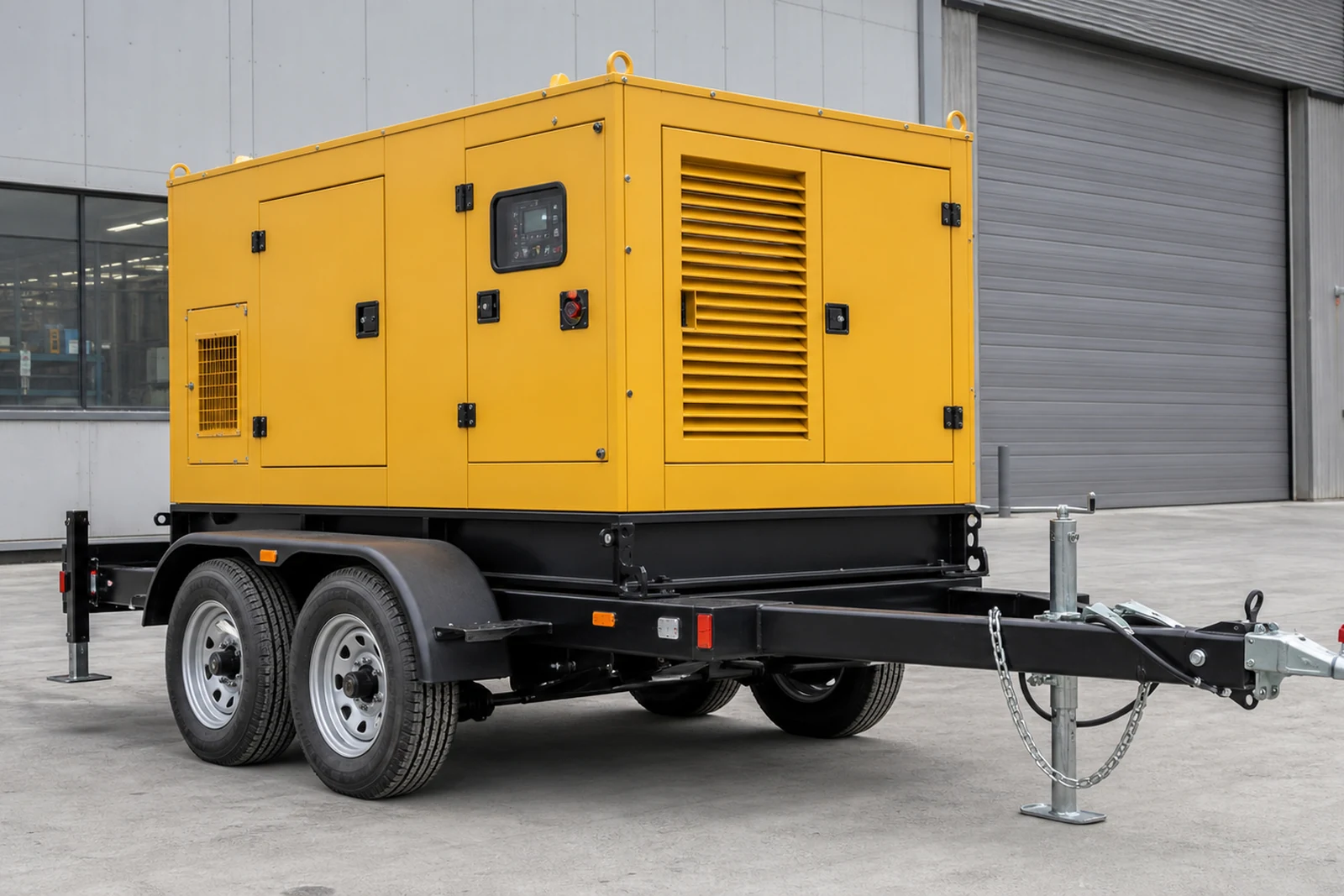
Product photos · Typical configuration
Typical 300 kW Cummins tandem-axle trailer generator for construction, repair and rental work, covering chassis, braking, output and runtime.
This page presents one typical project configuration to explain output, brand combination, package format and system interfaces. The same range covers additional outputs and options; the final engine model, rating, voltage, controller, tank, dimensions and supply scope are defined for the project.
Applications
Supports construction, plant maintenance, events and rental work with options for acoustic enclosure, extended fuel, rapid cable connection and remote records.
The engine and alternator determine loaded performance; axle load, brakes, drawbar, steering, supports and lighting determine safe transport and placement.
Core configuration
Engine, alternator and cooling are matched to loads, ambient conditions and enclosure resistance for stable starting and loaded operation across sites.
Frame, drawbar, turntable or steering, axles, tires, brakes, lighting and supports determine transport and placement safety against gross weight and local road rules.
Weatherproof or acoustic enclosure protects the package; terminals, sockets, quick connectors, cable length and voltage drop are selected for site loads and deployment time.
Fuel, refueling, controller, emergency stop, grounding, task lighting, monitoring and cable management determine how quickly and safely the set can start work.
Key parameters
These are the parameters that shape selection and interfaces. Fuel consumption, noise and dimensions are supplied after the engine model, load factor and site environment are defined.
| Reference output | 300 kW / 375 kVA @ PF 0.8 |
|---|---|
| Rating basis | Prime/standby rating confirmed against the final engine model, ISO 8528 conditions and duty |
| Engine / alternator | Cummins / Project-selected alternator |
| Trailer format | Tandem-axle trailer |
| Road / towing | Tow vehicle, gross weight, axle loads, coupling, brakes, tires, lighting and road permits confirmed by project |
| Enclosure / output | Weatherproof or acoustic enclosure; terminals, industrial sockets or quick connectors selected for loads and cables |
| Fuel autonomy | Base or extended tank sized from continuous runtime, usable volume and refueling route |
| Deployment interfaces | Leveling supports, emergency stop, grounding, task lighting, monitoring and cable management available |
Quality and delivery
Engine, alternator, controller and breaker brands, models and serial information are listed in the technical and delivery documents.
Base steel, welds, fasteners, mounts and coating are included in manufacturing inspection; container packages also cover doors, hinges, locks, seals and lifting points.
Radiator, airflow, wiring terminations, grounding, protection and safety separation support loaded stability and long-term serviceability.
Factory records can cover starting, no-load and staged-load operation, voltage, frequency, alarms and protection, with witnessed FAT available by project.
Project configuration
Provide the country and city, load list, frequency, voltage, duty, installation environment and required delivery. A HOHANK engineer will verify output, component selection, interfaces and the supply boundary.