A large outdoor project needs a dedicated equipment space
For factories, data centers, large commercial facilities and critical-facility expansions where the enclosure organizes protection, airflow and maintenance space.
Product Range / Pre-Integrated High-Capacity Power
A generator, acoustic airflow system, exhaust, fuel, controls, distribution and service space preassembled as one outdoor power station. This format suits high-capacity projects, complete transport and multiple system interfaces, reducing on-site enclosure work and coordination between trades.
Why Choose a Containerized Power Station
The container does more than cover the generator. It brings thermal management, fuel, electrical systems, safety and maintenance space into one transportable power station.
For factories, data centers, large commercial facilities and critical-facility expansions where the enclosure organizes protection, airflow and maintenance space.
Generation, controls, fuel, distribution and auxiliaries are combined in advance; site work centers on foundations, cabling, piping and commissioning.
Enclosure dimensions, operating weight, turning radius, crane position and service-door orientation directly affect delivery and placement.
For moderate ratings and simple interfaces, a sound-attenuated set is usually more compact. A container should be justified by capacity, service access and integration needs.
Enclosure Configuration Range
Enclosure size cannot be assigned by rating alone. Engine heat rejection, acoustic treatment, fuel, switchgear, paralleling and personnel access all change the final length and internal layout.
For projects where the generator and auxiliaries fit a compact arrangement, with airflow, door openings and internal service clearances carefully checked.
Provides more space for high-capacity equipment, distribution and service routes, with greater flexibility for airflow and system interfaces.
Length, door positions, airflow paths and cabinet layout are adapted to the equipment combination, logistics boundary and site conditions.
Multiple containerized sets can be combined with paralleling, distribution, fuel and remote monitoring to provide redundancy and staged expansion.
Available ratings cover approximately 200kW to 2MW. Final rating, enclosure size, transport method and system modules are confirmed against loads, engine platform, 50Hz/60Hz, voltage, environment and maintenance requirements.
Ratings and Engine Platforms
High-capacity projects should not be compared by nameplate rating alone. Starting demand, load steps, altitude and temperature, paralleling, local service and fuel quality all affect the engine-alternator package.
Pre-Integrated System Scope
Any module added late can take away airflow, service or cable space. Interfaces and acceptance responsibility should be clear before the enclosure layout is frozen.
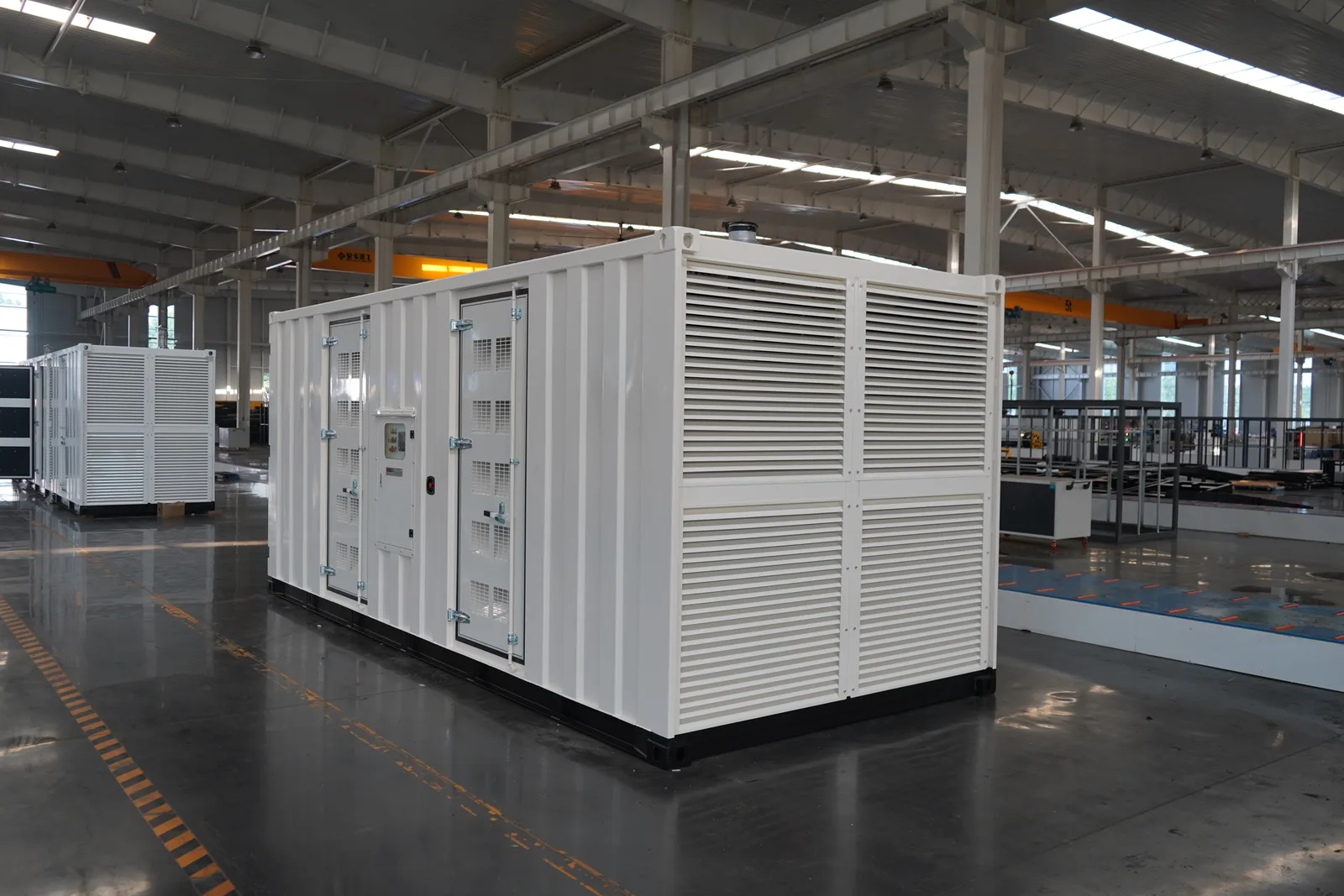
Engine, alternator, vibration isolation and coupling establish the basic output and service boundary.
Air volume, system resistance, attenuation and hot-air separation determine loaded performance in high temperatures.
Silencer, backpressure, insulation, discharge direction and site clearances must be coordinated.
Day tank, external storage, transfer control, level monitoring and leak management are designed around the required runtime.
Generator controls, alarms, emergency stop, communications and operating records must support supervision and traceability.
Breaker, cable exit, low-voltage distribution and paralleling-panel positions affect cable routes and service access.
Fire detection, suppression, access control and emergency lighting require interfaces aligned with the project standard.
Sheet metal, floor, doors, hinges, locks, lifting points, lighting and heating affect transport and long-term operation.
Six Project Inputs
Confirm maximum simultaneous load, starting sequence, N+1 requirement and future growth to choose a single or multi-set system.
Define 50Hz/60Hz, project voltage, grounding, cable exit, ATS, paralleling and low-voltage distribution boundaries.
High temperature, altitude, dust, salt spray and acoustic targets change airflow, materials and enclosure dimensions.
Use the required autonomy to define day tank, external storage, automatic transfer, leak monitoring and fire-safety scope.
Check transport dimensions and weight, turning access, crane location, lifting points, foundation loading and service-door orientation.
Confirm personnel routes, component-removal paths, lighting, spares, inspection records and fault-response arrangements.
Choosing the System Format
| Comparison | Sound-Attenuated Set | Containerized Power Station | Multi-Set Paralleled System |
|---|---|---|---|
| Primary task | Compact outdoor weather and acoustic protection. | High-capacity equipment space, complete transport and multi-system pre-integration. | Higher total capacity, redundancy, staged loading and future expansion. |
| Space | Closely follows the generator package and remains relatively compact. | Can provide personnel access, cabinet, fuel and auxiliary-system space. | Can use multiple acoustic or containerized sets with paralleling and distribution. |
| Confirm first | Measurement distance, cooling, weather protection and service doors. | Transport, lifting, thermal management, fuel, cable exit, fire and security. | Load sharing, synchronization protection, busbar, N+1 logic and expansion interfaces. |
| Typical projects | Hotels, hospitals, schools, shopping centers and other occupied areas. | Large factories, data centers, energy centers and outdoor critical facilities. | Projects above 1MW, staged expansions or sites that cannot accept a single point of failure. |
Typical Project Tasks
Address motor starting, distribution, continuous operation, refueling and future expansion while reducing modifications to the existing plant.
For data centers, hospital energy centers and large commercial facilities, configuration logic follows critical loads and allowable outage duration.
Where local service resources are limited, plan autonomy, remote alarms, spare parts and on-site service space in advance.
Typical configurations · Not the complete range
The range is not limited to the models below. These examples show common outputs, brand combinations and package choices; refer to the series overview for full coverage and available options.
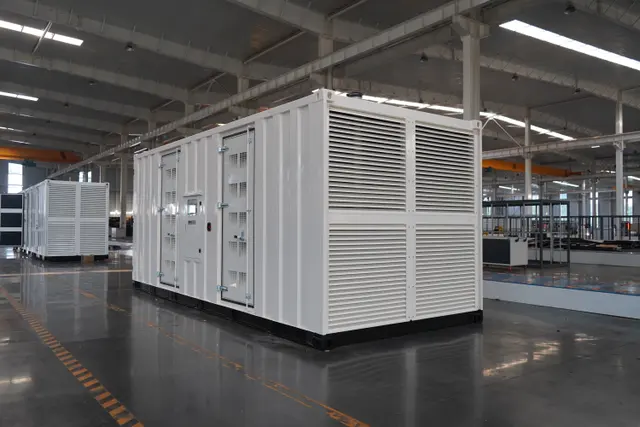
Yuchai power with a Faraday alternator, integrating airflow, exhaust and service space in one container.
View this configuration →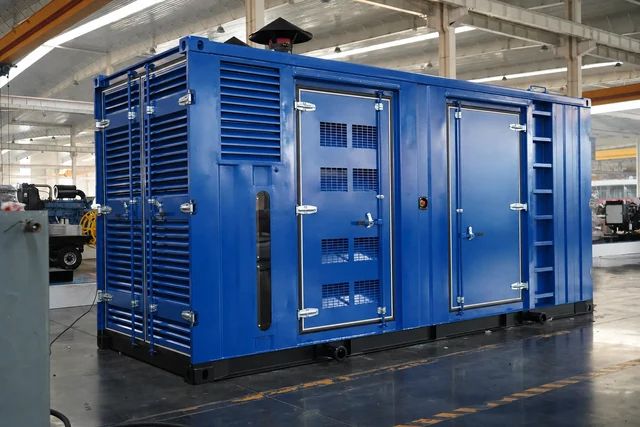
A 1 MW-class Cummins package coordinating thermal management, distribution, fuel and redundancy.
View this configuration →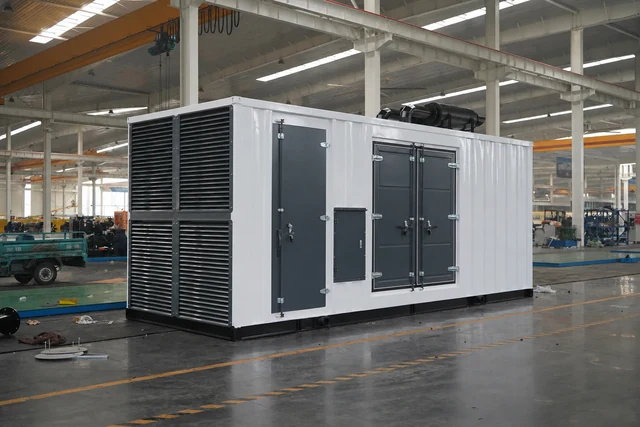
A 1.2 MW-class Weichai and STAMFORD package designed around thermal, logistics and paralleling interfaces.
View this configuration →Share the country and city, critical loads, estimated rating, redundancy approach, environment, transport access, required runtime and system interfaces. HOHANK engineers will define rating, enclosure and implementation scope.